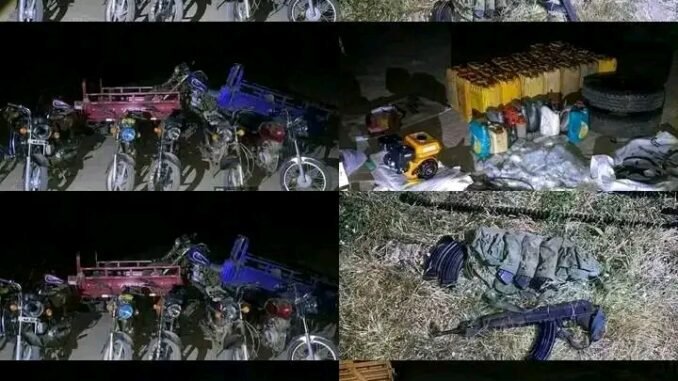
U.S. Strikes in Northwest Nigeria: Comprehensive Coverage, Released Evidence, and Reactions to Deadly Attacks…
On December 25, 2025, the United States military conducted airstrikes in northwest Nigeria targeting militants it identified as Islamic State (ISIS/ISIL) fighters. The strikes, which occurred on Christmas Day, represented a significant escalation in American engagement in the Sahel and Lake Chad Basin region — drawing intense international attention, local shock, and mixed reactions both within Nigeria and abroad.
Background to the Strikes
U.S. President Donald Trump announced the operation via social media late on December 25, describing the attack as a “powerful and deadly strike” against ISIS militants whom he accused of “targeting and viciously killing, primarily, innocent Christians.”
According to U.S. Africa Command (AFRICOM), the strikes — coordinated with Nigerian authorities — focused on ISIS-linked targets in Sokoto State in northwest Nigeria. U.S. military statements said that “multiple ISIS terrorists” were killed.
 ⁸
⁸
Nigeria’s Foreign Minister Yusuf Tuggar confirmed that the strikes were conducted in cooperation with the federal government and were based on shared intelligence and security objectives. Nigerian authorities have emphasised that the operations were aimed at terrorists and were not directed at any specific community or religious group.
Imagery, Footage, and Released Evidence
Missile Launch Footage
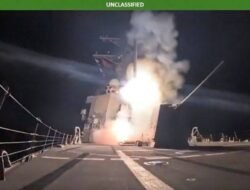
The U.S. Department of War (equivalent to the Department of Defense) released video footage showing missiles being launched, presumably from a U.S. naval vessel, as part of the operation. This video was distributed publicly via official Defense Department channels and social media, serving as visual evidence of the strike itself.
Ground Photos and Aftermath Imagery
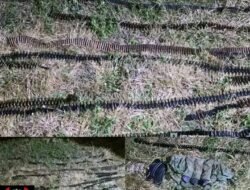
International news agencies and independent photographers have captured striking images from Sokoto State, particularly the village of Jabo, where the explosions were reported to have occurred. These images show:
Anti-bomb squad units inspecting strike sites.
Locals surveying debris and fragments of ordinance.
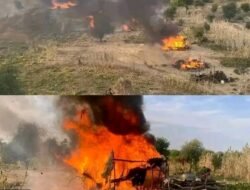
Charred earth and damage to the landscape near hit areas.
Villagers collecting metallic fragments believed to be parts of missiles or vehicles.
Some of these images, circulated widely on social media and news wire services, provide rare visual documentation of the immediate physical aftermath of the strikes.
Social Media and Local Documentation
In addition to formal releases, Nigerians in affected areas have shared photos and short videos on social platforms showing:
Burn marks and fire damage in Jabo following loud explosions.
Remnants of what appear to be missile fragments disseminated in fields.
Videos of a fiery glow in the nighttime sky as explosions occurred.
These locally sourced visuals have become part of the wider narrative — raising questions about both the precision of the strikes and their impact on civilian communities.
Local Reaction and Human Impact
Shock and Fear Among Villagers
Residents of Jabo, a predominantly rural village about 100 kilometers south of Sokoto City, described being startled by the strikes:
> People reported loud noises, the sky glowing red, and the ground shaking, comments that captured the intensity of the explosions. Residents also expressed bewilderment at being struck in a location they believed had no known ISIS presence.
Local testimonies published by media outlets like the Associated Press describe villagers gathering debris, sharing images, and voicing fear for their families’ safety. Several residents said they had never experienced violence of this scale in their community.
No confirmed civilian casualties have been reported by official sources, but the psychological impact on local populations is profound.
Conflicting Narratives on Targets
Experts and analysts have challenged the United States’ stated justification — particularly the claim that these strikes were primarily a response to attacks on Christians. Critics note:
Sokoto State is predominantly Muslim, and there is limited historical evidence of ISIS-linked killings specific to Christians there.
Independent analysts argue the region has more issues with bandits and loosely connected armed groups than with established ISIS militancy.
These conflicting interpretations have fed a broader debate about the accuracy of U.S. intelligence and the rationale for selecting specific targets.
Government and Military Statements
United States Position
U.S. officials frame the operation as part of broader efforts to combat extremist groups in West Africa. In official statements:
President Trump reaffirmed the U.S. commitment to global counterterrorism and declared the strikes a successful joint effort with Nigeria.
AFRICOM noted the strikes were conducted with Nigeria’s approval and focused on degrading ISIS networks in northwest Nigeria.
Nigerian Government Position
Nigeria’s Foreign Ministry stressed that:
The strike was a coordinated effort within ongoing security cooperation.
Nigeria is a multi-religious country facing diverse security threats affecting all communities.
The operation was challenging but aimed at preventing extremist entrenchment.
However, some Nigerian voices — from civil society, human rights analysts, and opposition figures — have called for greater transparency and evidence of the militant presence justifying such airstrikes.
International and Domestic Scrutiny
The strikes have prompted intense discussion across media and diplomatic circles:
Questions Over Targeting and Justification
Security analysts have highlighted a lack of clarity over:
The choice of Sokoto State as a target zone.
The presence or strength of ISIS forces in those areas.
The degree and nature of intelligence shared between U.S. and Nigerian authorities.
Nigerian Public Opinion
Reactions in Nigeria are mixed:
Some citizens support international assistance against longstanding insecurity.
Others argue that Nigeria has its own capable military and that foreign strikes risk sovereignty and civilian safety.
Strategic and Geopolitical Implications
Broader U.S. Counterterrorism Policy
The U.S. strike in Nigeria fits into a larger pattern of U.S. military action against extremist groups in Africa, including operations in the Sahel and East Africa. This episode may mark:
A continuation of precision strikes targeting militant groups.
An expansion of U.S. military footprint in the region.
A precedent for future collaborative—or independent—military engagements.
Nigeria’s Security Landscape
Nigeria continues to face complex security challenges:
Militancy from groups like Boko Haram and ISIS-affiliated factions.
Widespread banditry, kidnapping, and criminal violence.
Regional displacement and humanitarian crises.
The Christmas Day strikes have highlighted both the scale of insecurity and the difficult balance between foreign assistance and national sovereignty.
—
Summary of Key Points
✔️ Operation Conducted: U.S. airstrikes hit northwest Nigeria on December 25, 2025, targeting ISIS militants.
✔️ Joint Action: Nigerian authorities confirmed coordination and intelligence-sharing.
✔️ Released Evidence: U.S. missile footage and ground visuals from Sokoto.
✔️ Local Impact: Villagers reported shock and confusion; no official civilian casualty figures released.
✔️ Debate and Scrutiny: Questions remain about target selection, evidence of ISIS presence, and political motivations.
—
If you’d like, I can prepare a timeline of events, a photo gallery of published images, or a fact-checked list of all official statements on this subject.
Leave a Reply