Breaking News: U.S. President Donald Trump Releases Evidence of Strike in Sokoto, Nigeria…
In a major international development over the Christmas holiday weekend, **U.S. President Donald J. Trump announced and publicly released evidence of a U.S. military strike in Sokoto State, in northwest Nigeria. The dramatic announcement — and the accompanying imagery and messaging — marks a significant escalation in U.S. foreign policy and military engagement in West Africa, drawing reactions from governments, analysts, and communities across the globe.
The strike was first announced on December 25, 2025, when President Trump took to his Truth Social platform to declare that U.S. forces had conducted “powerful and deadly” operations against militant targets in Nigeria. Within hours, the White House and the U.S. Department of War (equivalent to the Pentagon) released military footage and additional evidence supporting the conduct of the operation.
—
I. The Announcement: Trump’s Public Release of Evidence
President Trump’s announcement came late on Christmas Day, a highly symbolic moment that he used to frame the operation as both a counter-terrorism success and a fulfillment of his administration’s commitments to protect vulnerable communities abroad.
In his Truth Social post, Trump claimed the U.S. strike was aimed at ISIS fighters whom he accused of “slaughtering Christians.” He wrote that “the Department of War carried out several perfect strikes,” and he concluded by wishing a “Merry Christmas to all,” including those militants who were hit — a phrase that immediately drew global attention.
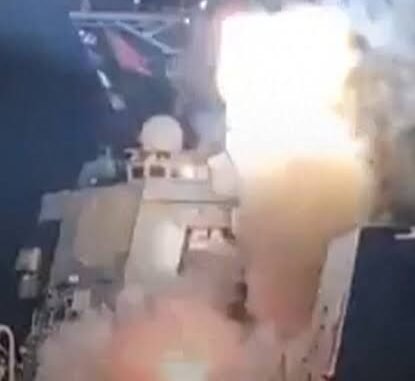
Alongside the announcement, official channels released video footage and imagery that the Department of War described as evidence of the operation. The visuals include:
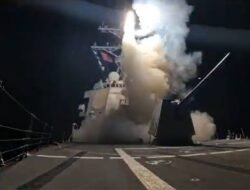
Launch footage showing Tomahawk cruise missiles fired — purportedly from a U.S. Navy vessel in the Gulf of Guinea — heading toward targets in Sokoto State.
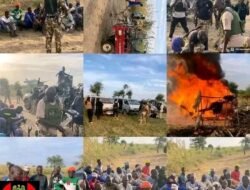
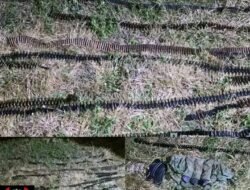
Reconnaissance images suggesting impacts near alleged militant encampments.
Graphics and annotated maps illustrating target locations and strike paths, intended to demonstrate precision and effectiveness.
The release of these visuals is a rare move in modern U.S. military operations, where imagery is often classified or withheld. Analysts say this public dissemination of strike footage signals an intention by the administration to justify the mission in real time to both domestic and international audiences.
—
II. What Happened in Sokoto? The Context of the Strike
According to official U.S. and Nigerian statements, the strike occurred in Sokoto State, in northwest Nigeria — a region far from the well-known Islamist insurgencies in the northeast of the country. The U.S. Africa Command (AFRICOM) said the operation targeted what it described as Islamic State (ISIS) militants operating in the area.
The U.S. military’s account, which accompanied the released footage, said the strike killed “multiple ISIS terrorists,” and suggested it was part of ongoing counter-terrorism cooperation with Nigeria. U.S. Defense Secretary Pete Hegseth — in posts on social media — praised the operation and thanked the Nigerian government for its support, while warning that “more” actions could follow.
President Trump and U.S. defense officials framed the action as a response to violent attacks on Christians, using language that emphasized religious persecution as a justification for intervention. However, that characterization has been contested by Nigerian officials and independent analysts.
—
III. Statements from Nigerian Authorities
Nigerian government officials confirmed the strikes and provided context for how the operation was coordinated:
Nigeria’s Foreign Minister, Yusuf Tuggar, stated that Nigeria provided key intelligence that led to the operation and that the strike was conducted with the full cooperation and knowledge of the Nigerian government.
Tuggar also emphasized that the action was undertaken within a framework of bilateral security cooperation and did not violate Nigeria’s sovereignty.
According to the minister, President Bola Tinubu gave approval for the coordinated action after discussions with U.S. counterparts, including then-Secretary of State Marco Rubio.
The Ministry of Foreign Affairs released a detailed statement stressing that Nigeria is a multi-religious country facing diverse security threats and that the fight against violent extremists affects all communities — not just one group. The government said it aimed to ensure that civilian lives were protected and that such collaborations adhered to international law.
—
IV. What the Evidence Shows — And the Debate It Sparked
Released Military Footage and Imagery
The evidence put forward by the U.S. Department of War includes:
Cruise Missile Launch Footage: Visuals purportedly showing U.S. cruise missiles being fired toward targets in Sokoto State — a central piece of evidence intended to demonstrate the strike’s execution.
Strike Assessment Imagery: Satellite and reconnaissance images suggesting impacts in areas identified as militant camps.
Annotated Graphics: Maps and overlays presented as supporting context for target selection and precision.
Trump and top Pentagon officials described these materials as proof of accurate targeting and effectiveness, emphasizing that the mission aimed to disrupt extremist networks that threaten civilian populations.
Skepticism and Contradictory Reports
Not all observers accept the official framing. Independent reports and local media from the Sokoto area indicate that:
Local residents reported explosions in villages like Jabo, but many say they have seen no evidence of an active ISIS presence there, nor confirmed casualties tied directly to extremists.
Some analysts argue that the militant groups active in Sokoto are more loosely affiliated “bandit” gangs or splinter cells rather than structured ISIS units, raising questions about whether the strike hit its intended targets.
Critics have also noted that Nigeria’s broader security crisis involves a complex mix of armed groups with overlapping motives — not solely religiously based extremist organizations — making precise attribution difficult.
—
V. Global Reactions and Strategic Ramifications
The U.S. release of evidence and public political framing has sparked reactions:
International Response
Many Western governments have acknowledged the strike as part of counter-terrorism cooperation with Nigeria, noting the dangers posed by extremist networks in the Sahel and West Africa.
Some human rights and policy groups have urged caution and transparency, calling for independent verification of civilian impacts and clearer evidence linking the strike to credible extremist threats.
Regional Implications
Nigeria’s neighbors and regional security bodies have expressed interest in enhanced cooperation to counter cross-border insurgencies, while also stressing the need for respect for national sovereignty and civilian safety.
Domestic U.S. Politics
Domestically within the United States, the announcement has been interpreted through partisan lenses. Supporters of the Trump administration commend decisive action against terrorism, while critics question the strategic rationale and timing, especially given broader debates over U.S. military involvement abroad.
—
VI. What Happens Next? Outlook and Unanswered Questions
As of the latest reports:
The U.S. government has signaled the possibility of further operations against extremist targets in West Africa if threats persist.
Nigeria insists that any continued cooperation will be governed by mutual agreement and respect for sovereignty.
Independent journalists and researchers are continuing to verify the accuracy of claims about militant presence and the effects of the strike.
Key unanswered questions include:
What independent evidence exists to confirm that ISIS militants were present and struck in the targeted locations?
Were there any civilian casualties or unintended damage that have not been publicly disclosed?
How will this action affect regional security cooperation and perceptions of foreign military intervention in West Africa?
—
Conclusion: A Controversial and Far-Reaching Development
The public release of evidence by President Trump regarding the Sokoto strike represents a rare and assertive use of multimedia to justify military action in real time. While the imagery and footage are intended to bolster the administration’s narrative of successful counter-terrorism operations, significant debate remains over the strike’s legitimacy, the accuracy of its justifications, and the broader implications for international security cooperation.
Given the evolving nature of the situation, further updates — including independent verification of the released evidence and responses from civil society and international actors — are likely to shape how this high-profile operation is ultimately understood and evaluated.
Leave a Reply