Breaking Analysis: Department of War Says U.S. to Release More Strike Locations in Nigeria Over Christian Killings…
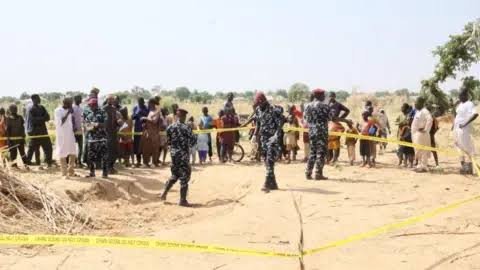
In one of the most dramatic escalations of U.S. foreign policy in West Africa in recent memory, the U.S. Department of War — as articulated by top U.S. officials — has signaled that additional strike locations in Nigeria may be released for future military action, framed as a response to ongoing violence and “Christian killings.” This development follows the December 25, 2025 airstrikes in Nigeria’s northwestern Sokoto State, which were publicly announced by U.S. President Donald Trump and have drawn global attention, controversy, and deep scrutiny.
The announcement of further potential strike locations — and the framework surrounding it — represents not just a continuation of U.S. military engagement, but also a highly political narrative about religious persecution, sovereignty, and counter-terrorism cooperation.
—
I. Background: U.S. Strike in Sokoto and the Christian Killings Narrative
On Christmas Day 2025, President Trump stated that U.S. forces carried out “powerful and deadly strikes” against Islamic State (ISIS)-linked militants in northwest Nigeria. He framed this action as retaliation against groups “targeting and viciously killing, primarily, innocent Christians.”
The U.S. Department of War released footage of missile launches and other imagery intended to serve as evidence of the operation — a rare level of public documentation usually not seen in classified military actions. This was accompanied by commentary from Trump and senior defense officials asserting that more strikes could follow if militant violence persisted.
U.S. Africa Command (AFRICOM) confirmed that the strike took place in Sokoto State, describing it as coordinated with the Nigerian government. Multiple militants were allegedly killed, though independent verification of both casualty and militant identities has been limited.
—
II. What the Department of War Is Now Signaling: Expanded Targeting
1. “More to Come” and Indicates Future Strike Locations
Following the initial strikes, both President Trump and Defense Secretary Pete Hegseth publicly indicated that this may be the beginning of ongoing operations, and that additional “locations to strike” related to the campaign against militants responsible for Christian killings could be identified and released. Hegseth’s social media commentary included the phrase “More to come…” — which has been interpreted by analysts as setting the stage for future operations.
These comments suggest:
A broadening of the military footprint beyond the initial Sokoto strike.
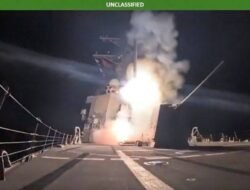
A commitment to naming or releasing additional militant strongholds or areas subject to U.S. strikes.
A message to both foreign adversaries and domestic supporters that the administration intends to follow through on its stated mission.
2. Christian Killings as Rationale
Central to this framing is Trump’s repeated claim that the strikes are a response to violence “primarily against Christians.” This narrative has been strongly promoted by the U.S. administration as a moral imperative justifying action — even though:
The Nigerian government has publicly rejected the framing that the violence targeted Christians exclusively, stressing that both Muslims and Christians suffer in the country’s complex security crises.
Independent analysts and local security experts emphasize that extremist violence in Nigeria is multifaceted — involving ISIS affiliates, Boko Haram, armed bandits, and communal conflicts — with no simple pattern of exclusively religious persecution.
Thus, the potential release of additional locations to strike reflects not only military planning but also political messaging aligning U.S. actions with perceived protection of religious communities.
—
III. Nigerian Government’s Position and Cooperation
1. Joint Operations and Shared Intelligence
Nigeria’s Foreign Minister Yusuf Tuggar confirmed that the initial Sokoto strike was undertaken in coordination with Nigerian authorities and intelligence sharing. He said President Bola Ahmed Tinubu approved the operation after consultations with U.S. officials, marking a joint security operation rather than unilateral U.S. action.
Tuggar explicitly stated that the operation “is not targeting any religion nor simply in the name of one religion or another,” pushing back against the narrative that the mission is purely about Christians versus Muslims.
Despite this, the U.S. public narrative continues to foreground Christian victimhood — a choice that has drawn concern from Nigerian civil society and political figures who fear the framing could worsen Nigeria’s internal religious sensitivities.
2. Prospects for Future Nigeria-U.S. Operations
Nigerian officials have signaled that this may be an ongoing collaborative effort, potentially involving additional strike locations and coordinated action against extremist elements. Tuggar described the partnership with Washington as something “ongoing” and part of a wider strategy that may include other partner nations.
This raises questions about how further targets are identified, vetted, and publicly disclosed.
—
IV. International and Domestic Implications
1. International Reaction and Concerns
The idea of releasing “strike locations” implicates several critical international law and sovereignty issues:
Nigeria insists any actions are coordinated and respect its sovereignty, but some critics warn that public U.S. targeting lists could undermine that sovereignty if perceived as unilateral.
Human rights groups often caution that open lists of strike targets may heighten risks for civilians if intelligence accuracy is uncertain.
Moreover, analysts say that releasing specific locations — particularly tied to a narrative of Christian killings — may artificially simplify or misrepresent the diverse nature of Nigeria’s extremists and local armed groups.
2. U.S. Domestic and Political Landscape
Domestically in the United States, linking military action in Nigeria to protection of Christians resonates with segments of the political base and conservative religious voters. It positions the administration as defending religious freedom abroad, a powerful rhetorical tool ahead of future political cycles. Meanwhile, critics argue that such framing risks misunderstanding or exploiting Nigeria’s complex conflict environment for political gain.
—
V. On the Ground in Nigeria: Ambiguity and Civilian Risk
While the U.S. government claims precision and intelligence support, residents in affected areas like Sokoto reported confusion and lack of clarity about the nature of the attacks, with some strikes reportedly hitting farmland or locations without documented militant presence.
This ambiguity reinforces concerns that:
Additional strike lists could inadvertently endanger civilians or target groups without verified extremist affiliations.
Conflict areas may become further destabilized if locals feel foreign forces are designating parts of Nigeria as target zones without clear evidence.
—

VI. Conclusion: A New Phase in U.S. Engagement
The Department of War’s indication that more strike locations may be released in Nigeria as part of an effort to respond to Christian killings represents an escalation and transformation of U.S. military involvement in West Africa. Whether these future actions materialize — and if so under what legal and ethical frameworks — will be watched closely by governments, civil society, and analysts around the world.
The push to identify and publicize additional targets is as much a political statement as it is a military strategy, one that carries potential benefits in counterterrorism coordination but also risks inflaming tensions, mischaracterizing complex conflicts, and placing civilians in harm’s way.
—
Key Points Summary:
Initial U.S. airstrikes took place in Sokoto State against ISIS-linked militants, framed as stopping violence against Christians.
Department of War officials hinted at “more to come,” suggesting future strike locations may be released.
Nigeria officially cooperated on the initial operation but rejects a purely religious narrative.
International and local critics warn that religious framing and public target lists complicate a highly volatile security environment.
If you want, I can also provide a timeline of how this diplomatic and military buildup unfolded, or a fact-checked breakdown of the different militant groups in Nigeria’s conflict zones to give deeper context.
Leave a Reply